From a 1909 invention to a 2026 legal turning point, here’s how the suppressor got where it is today.
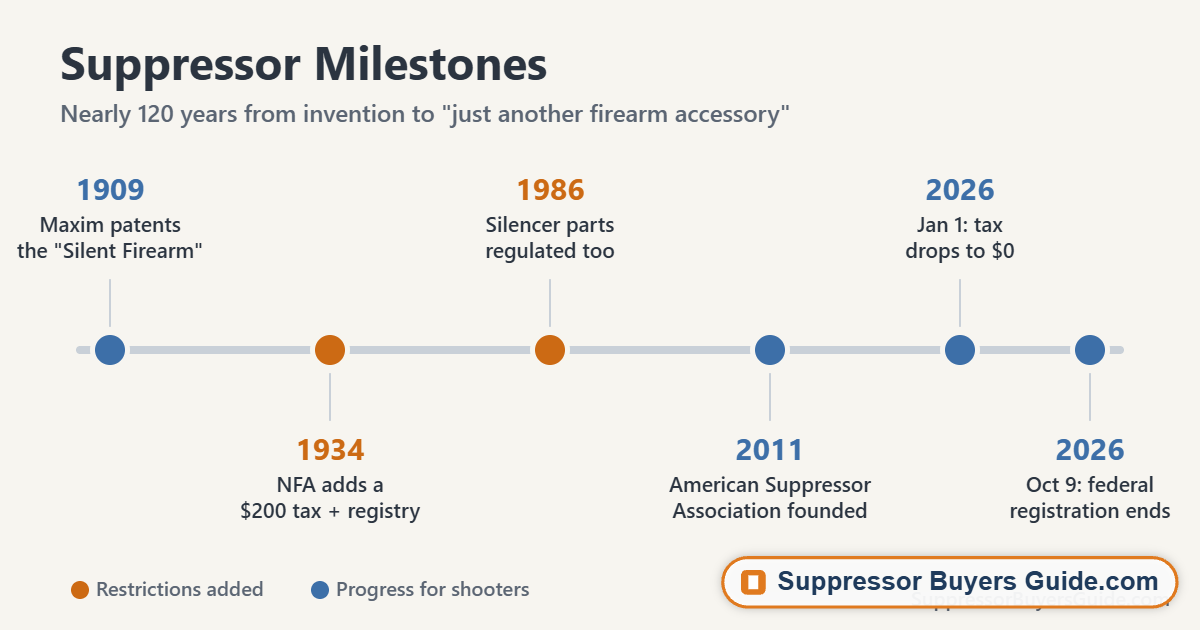
The Invention (1890s–1920s)
Late 1800s: Inventors start experimenting with ways to trap and slow the gas behind a bullet.
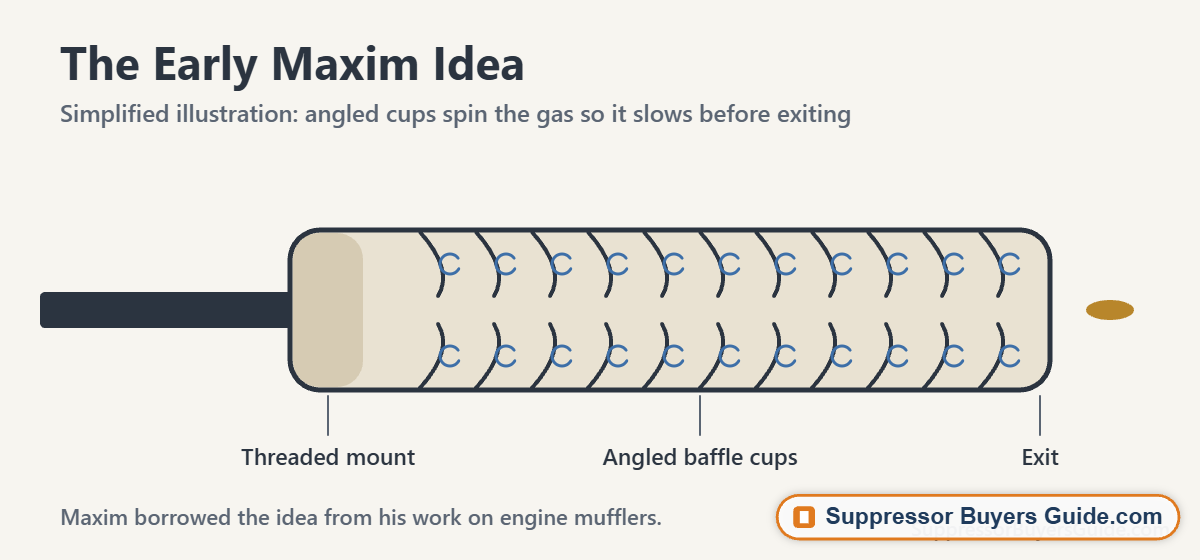
1902–1908: Hiram Percy Maxim, son of machine gun inventor Hiram Stevens Maxim, borrows ideas from his work on engine mufflers to design a practical gun silencer.
1909: Maxim patents his “Silent Firearm.” The core idea still holds today: give hot gas room and time to expand before it leaves the muzzle.
1910s: Maxim Silencers sell for a few dollars through hardware stores and catalogs. They’re marketed for target practice, hunting and keeping the peace with neighbors.
World War I: Militaries test suppressed rifles for special roles, but cans stay rare on the battlefield.
Regulation Arrives (1930s–1960s)
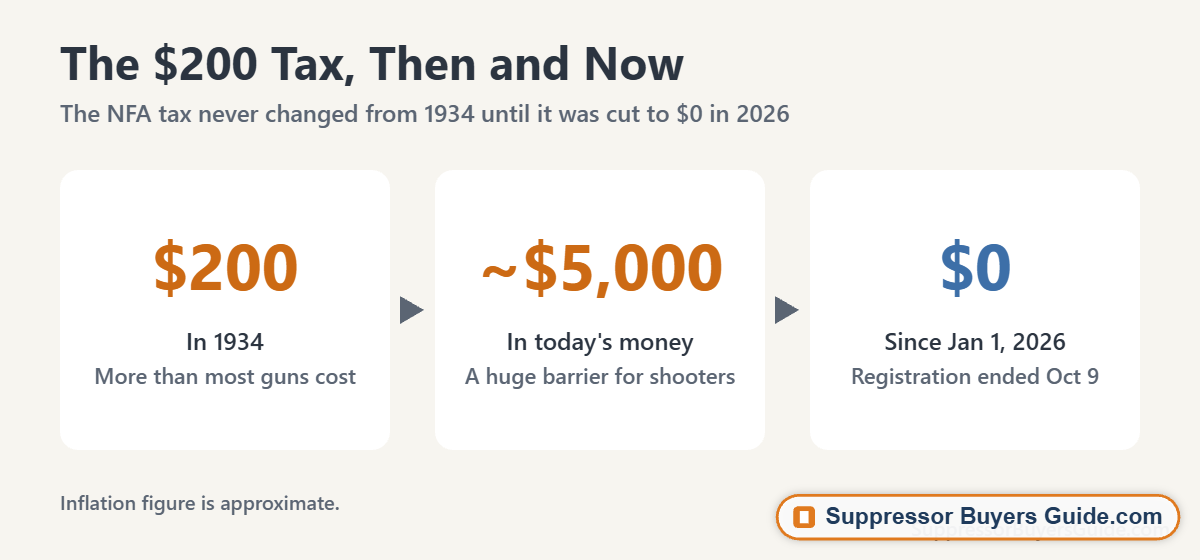
1934: The National Firearms Act puts a $200 tax and federal registration on suppressors. Aimed at gangster-era weapons, it also swept in silencers, partly over Depression-era poaching worries. Civilian ownership nearly disappears.
World War II: Suppressors go to war with spies and commandos. Famous examples include the OSS High Standard .22 pistol, the British Welrod and the De Lisle carbine.
1960s: In Vietnam, Navy SEALs carry the suppressed Smith & Wesson Mk 22 “Hush Puppy” pistol.
1968: The Gun Control Act tightens federal firearms rules overall.
The Modern Can (1970s–2000s)
1970s: Military and specialty makers like SIONICS and MAC refine suppressors for submachine guns. See Suppressor Manufacturers.
1986: The Firearm Owners Protection Act expands the legal definition of a silencer to include individual suppressor parts.
1980s–1990s: CNC machining, better baffles and tougher materials make cans smaller, stronger and quieter.
2000s: Suppressors go mainstream. Quick-detach mounts, subsonic ammo and purpose-built hosts catch on. In 2000, U.S. makers built about 5,000 suppressors.
The Boom (2010s–2025)
2011: The American Suppressor Association forms to push for legal reform.
2010s: State after state legalizes hunting with suppressors. Titanium, modular designs and better rimfire, pistol and rifle cans flood the market.
2015 & 2017: The Hearing Protection Act is introduced in Congress to deregulate suppressors. It doesn’t pass.
2016: ATF Rule 41 adds fingerprint and notification steps for trust buyers.
2021: U.S. suppressor production hits a record of about 480,000 in one year, nearly 100 times the 2000 level.
2020s: 3D-printed cores, flow-through designs and low-backpressure cans push tech forward. ATF’s eForm 4 cuts wait times from many months to days.
2024: About 3.5 million suppressors are registered in the U.S.
July 2025: The One Big Beautiful Bill Act cuts the NFA tax on suppressors to $0, effective January 1, 2026.
A New Era (2026)
January 1: The $200 tax stamp is gone after 92 years. Registration is still required.
August 5: A federal court in Texas rules the NFA’s registration rules can’t stand for $0-tax items like suppressors.
October 9: ATF stops enforcing federal registration and approval for suppressors nationwide. State laws still apply. Full details: What Changed in 2026.
Join the history
We may earn a commission from these links at no cost to you. Learn more.