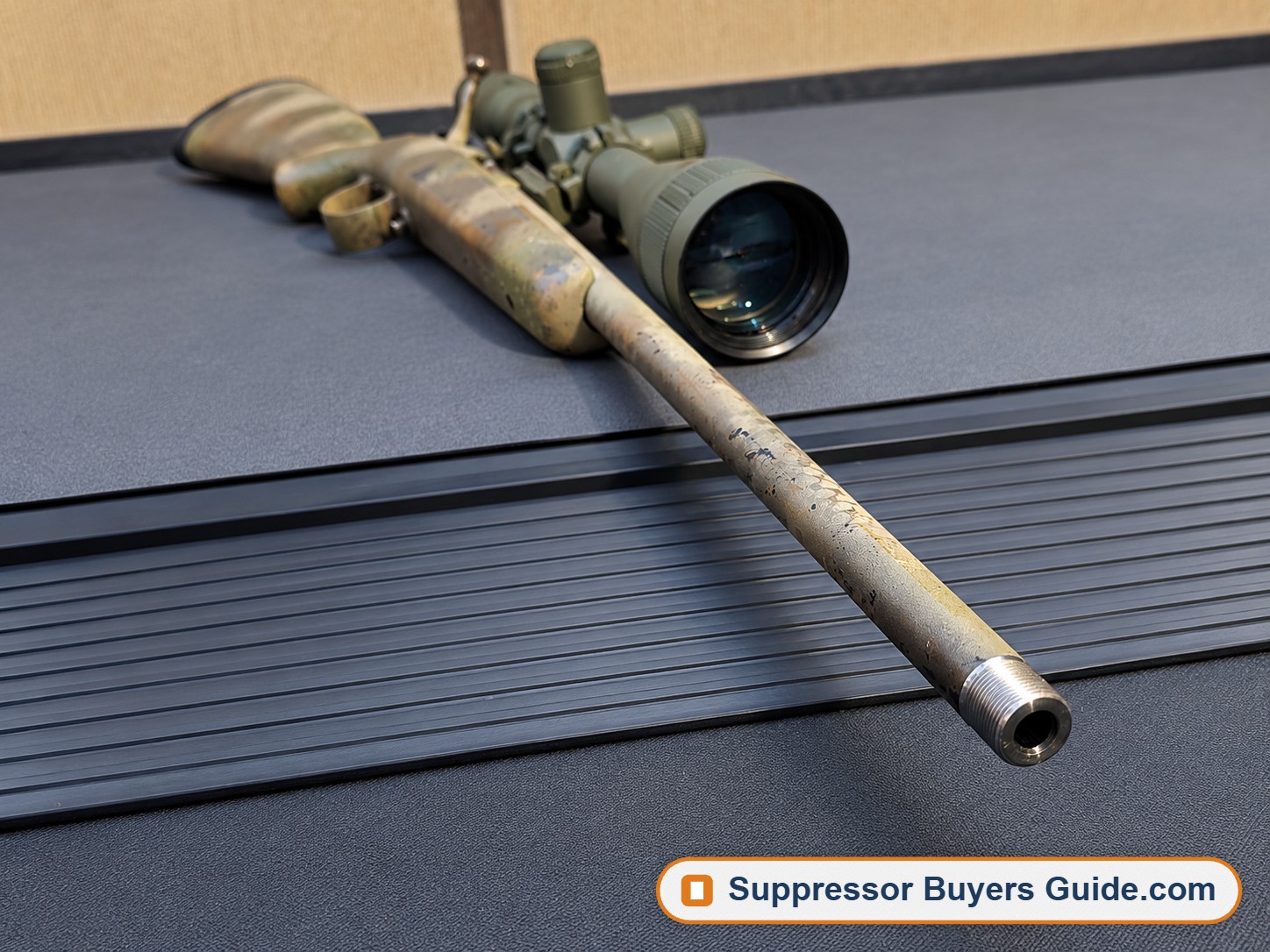
Before you thread: make sure your barrel has enough length and wall thickness. If you’re unsure, a gunsmith is cheap insurance. Common pitches are 1/2×28 (.22 and 5.56), 5/8×24 (.30 cal) and M14x1 LH (AK). More in Mounting Options.
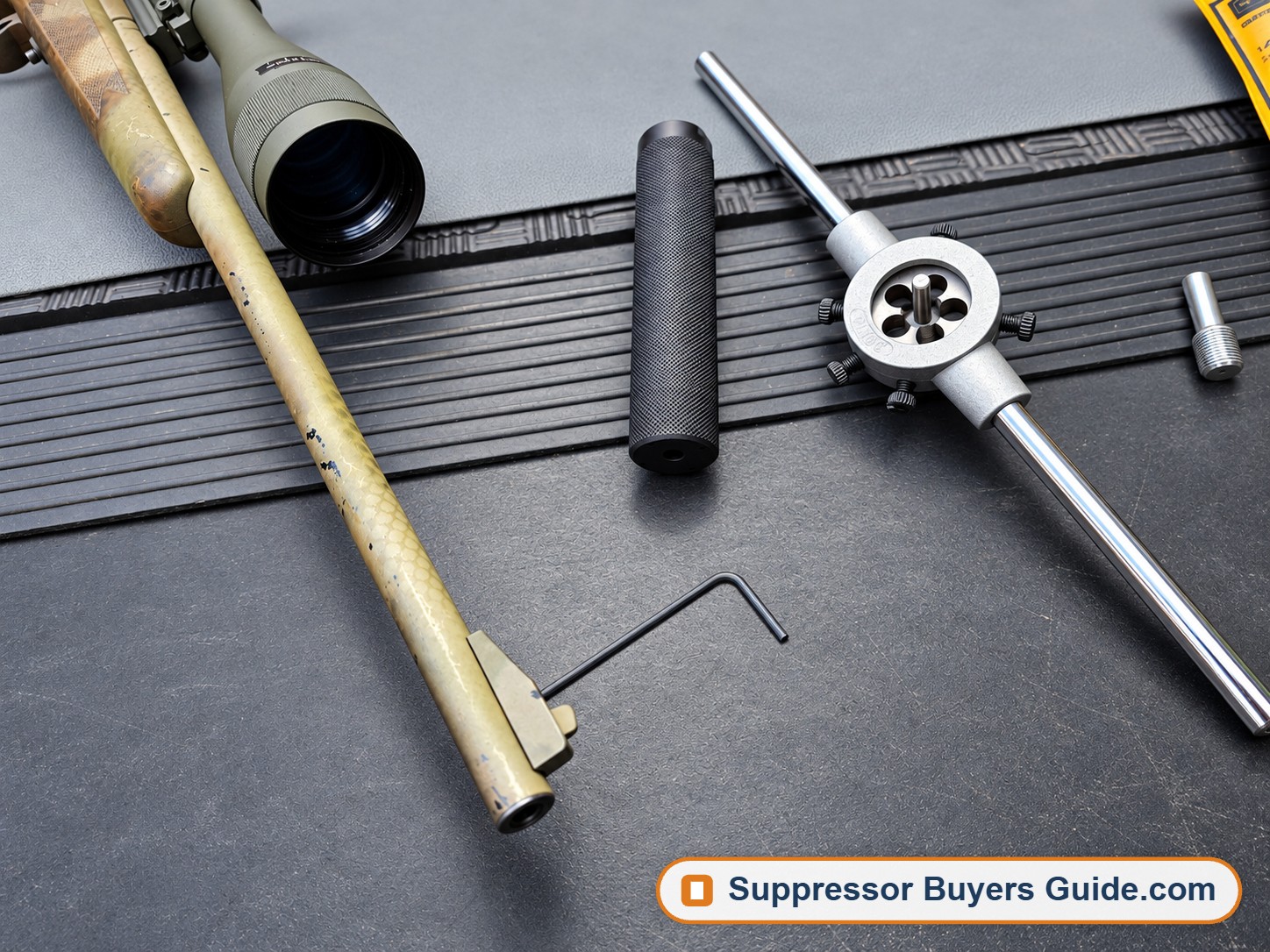
DIY barrel threading looks deceptively simple because the tool list is short, but the real challenge is keeping the new threads concentric with the bore rather than merely centered on the outside diameter of the barrel. A small bench vise like the WORKPRO Dual Jaws 2.5″ vise can hold the work, while round dies such as 1/2″-28 or M14 x 1.0 LH provide the thread form. The die holder, starter tools, and thread-alignment tools are there to help keep the die square as it begins cutting. The exact thread pattern has to match the firearm and the muzzle device being used.
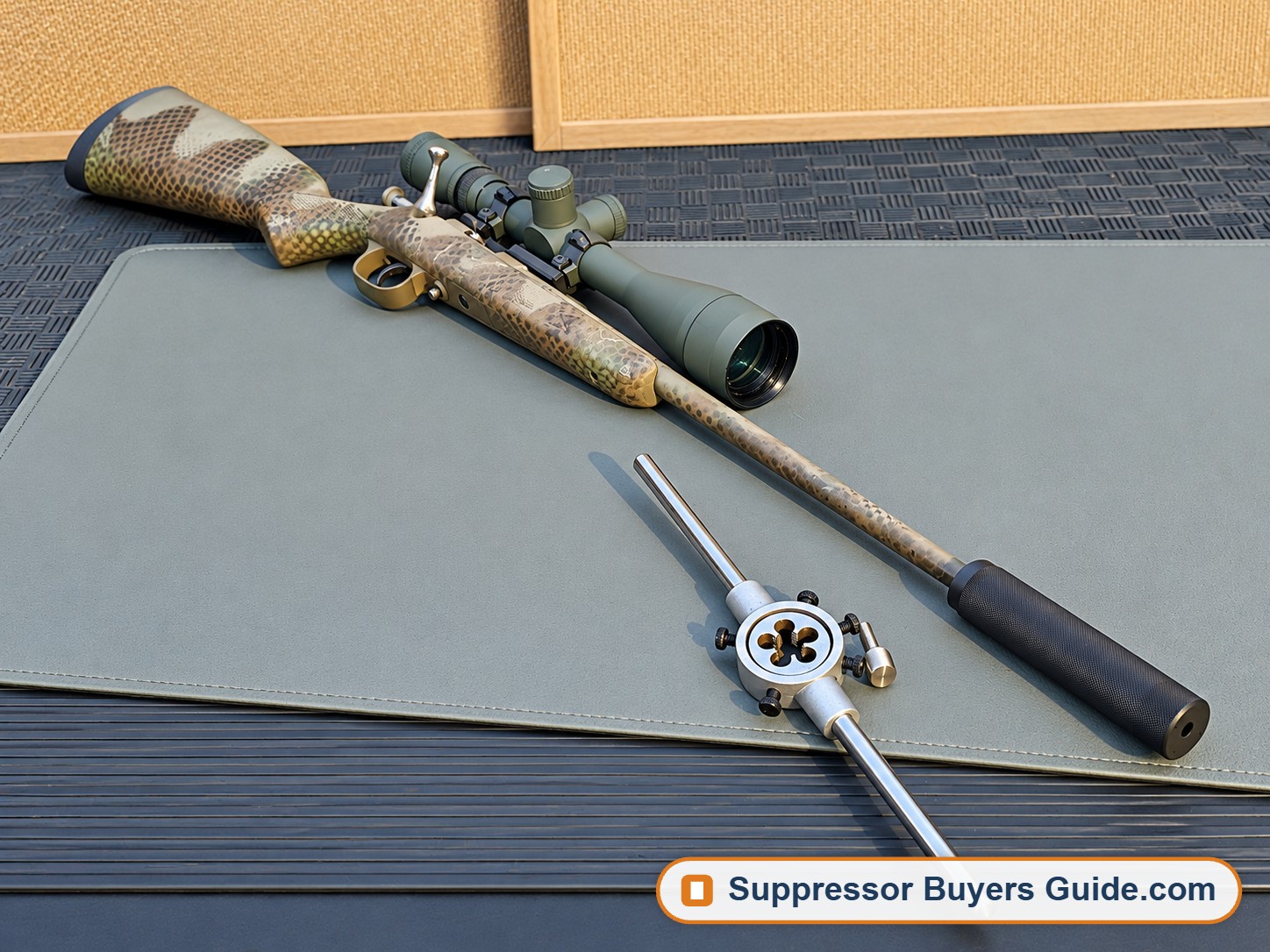
The alignment tools are especially important because a thread can look clean and still be slightly crooked. A 1/2″-28 muzzle thread alignment tool or caliber-specific die starter helps establish the initial relationship between the bore and the die. The .22, 9mm, .308, .300 and 7.62 starter tools in this setup cover several common bore sizes, while the carbon-fiber alignment rods provide a separate way to check whether an installed muzzle device is reasonably centered on the bore.
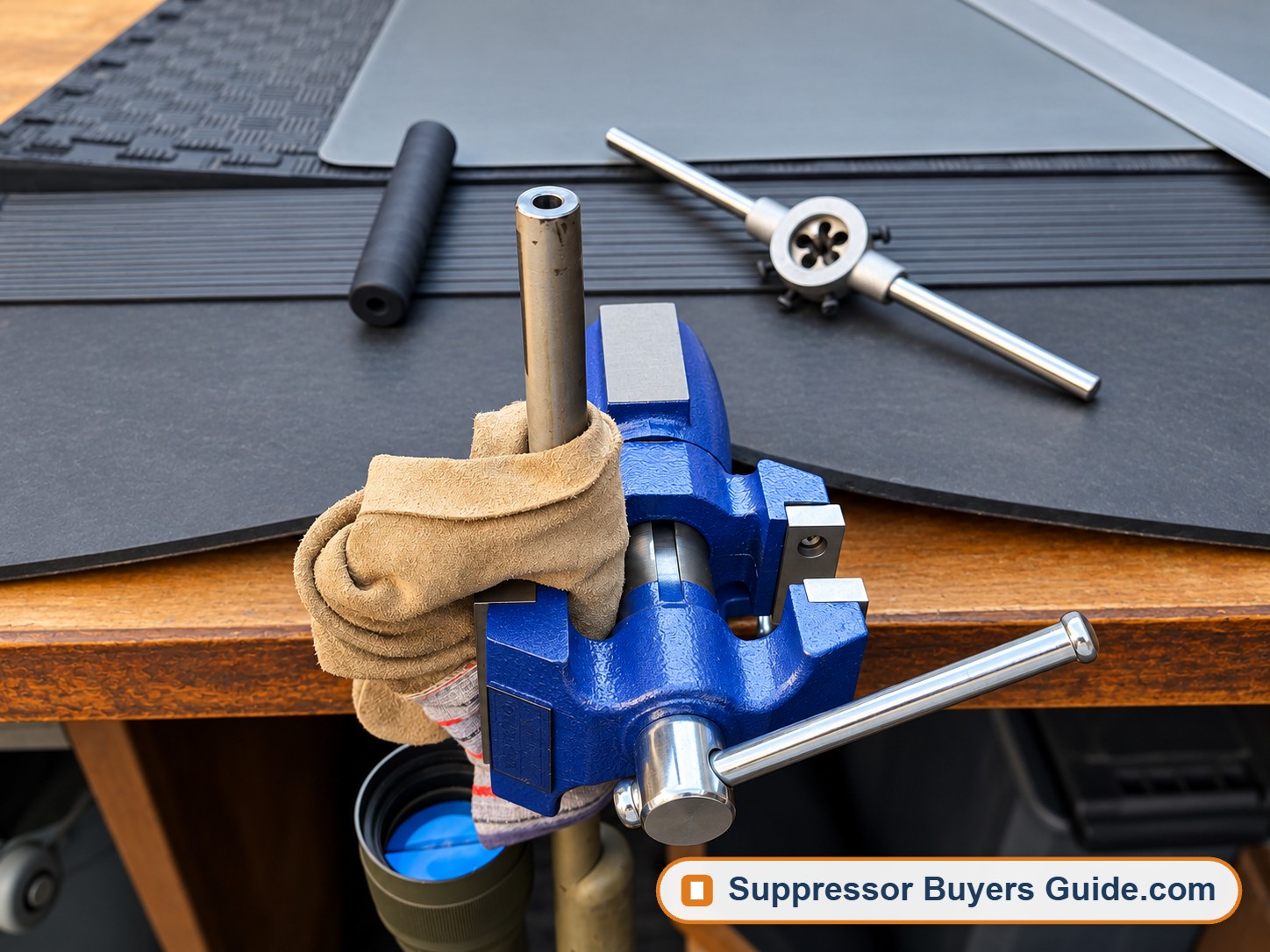
That final alignment check becomes much more important when the muzzle device extends the bullet’s path, particularly with a suppressor. The .22 and .308/7.62 alignment rods can reveal obvious angular misalignment before the firearm is used. They are best treated as inspection tools rather than proof that the job is perfect. Barrel shoulder condition, bore concentricity, thread quality, crown condition and the muzzle device itself can all affect alignment.
Shop threading gear
We may earn a commission from these links at no cost to you. Learn more.